A Day Hike in Rocksylvania
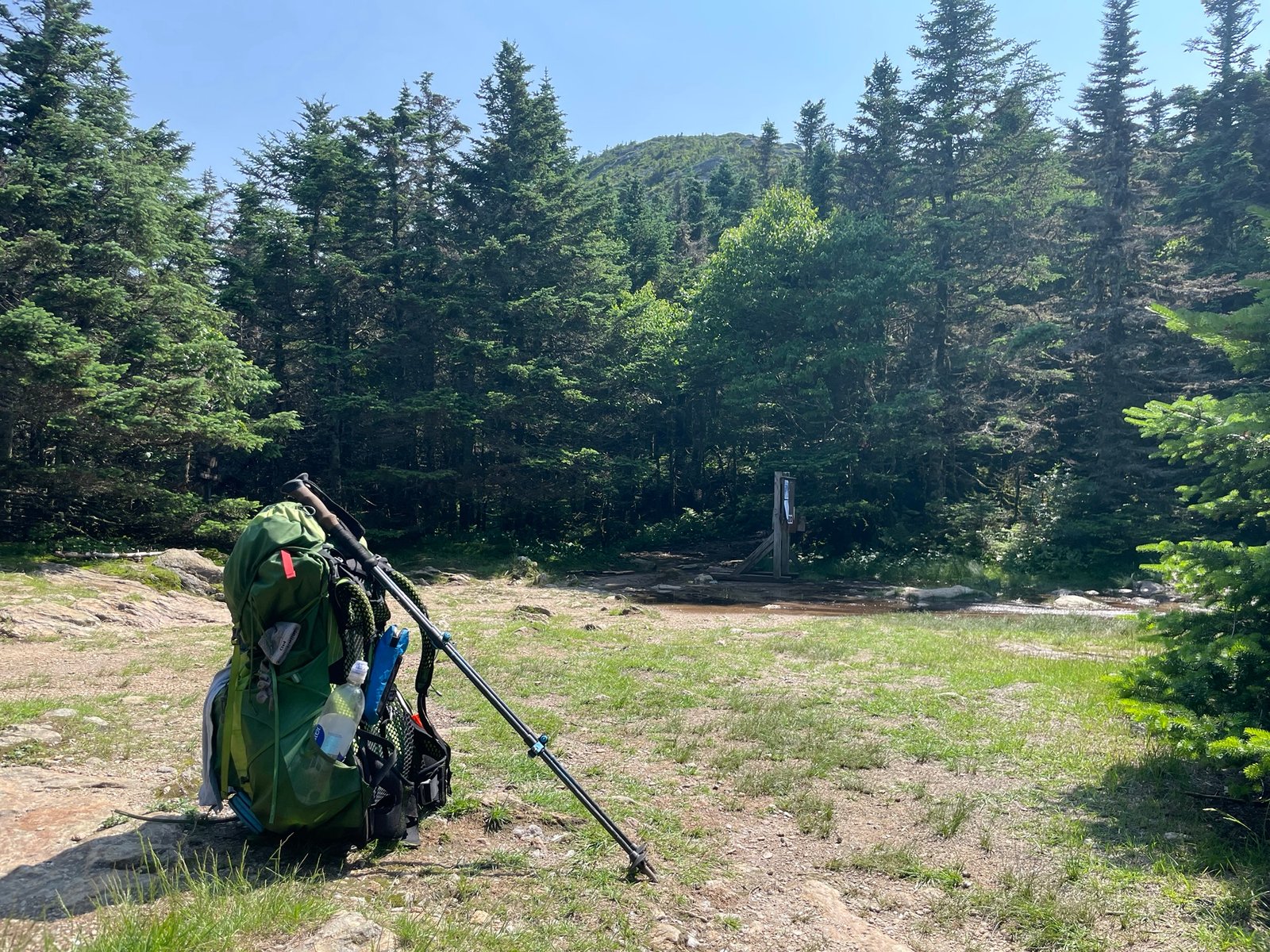
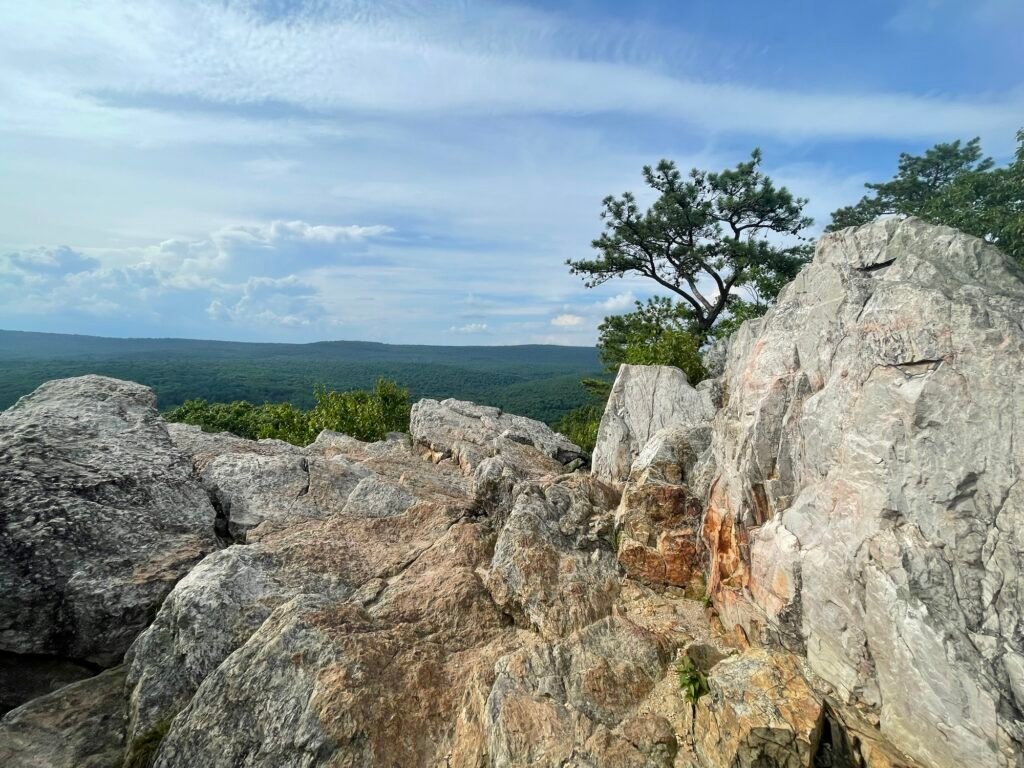
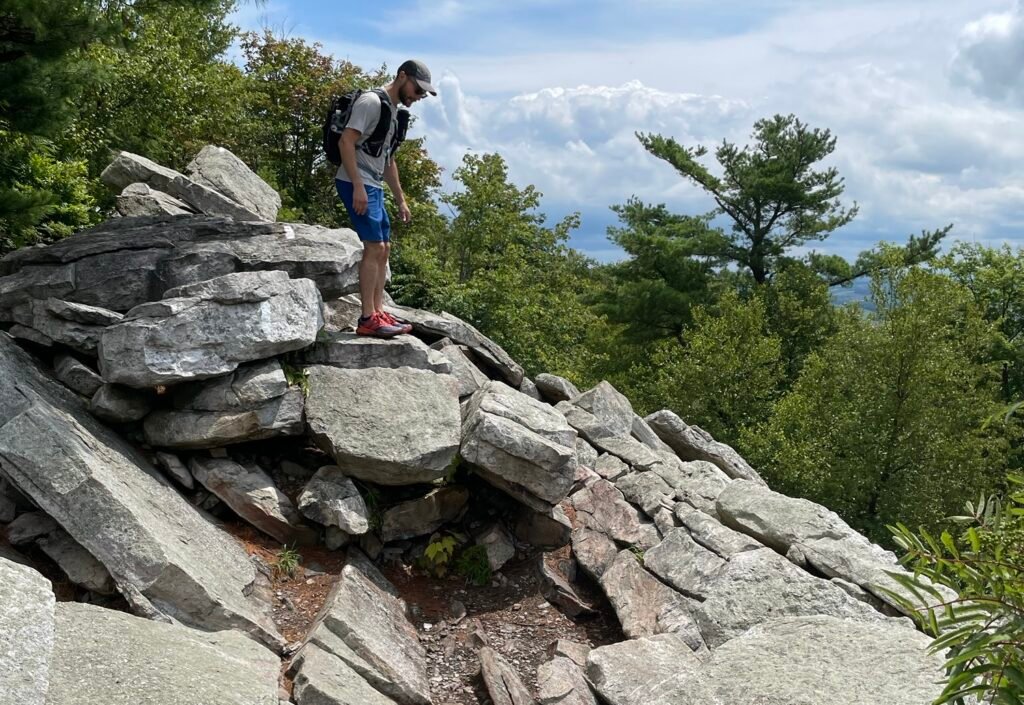
Just yesterday, it happened again. I went for a day hike on the AT in Pennsylvania, accessing the trail from the blue-blazed White Rocks Trail. As always, I had my trekking poles with me, ready to use for balance when needed. As the trail ascended toward the rocky ridge, I stopped to set my pack down. I’d held both poles in one hand for the last half mile, using the other to carry litter I’d picked up. It was time to stow the trash in my pack, freeing both hands to use the poles through the rocks.
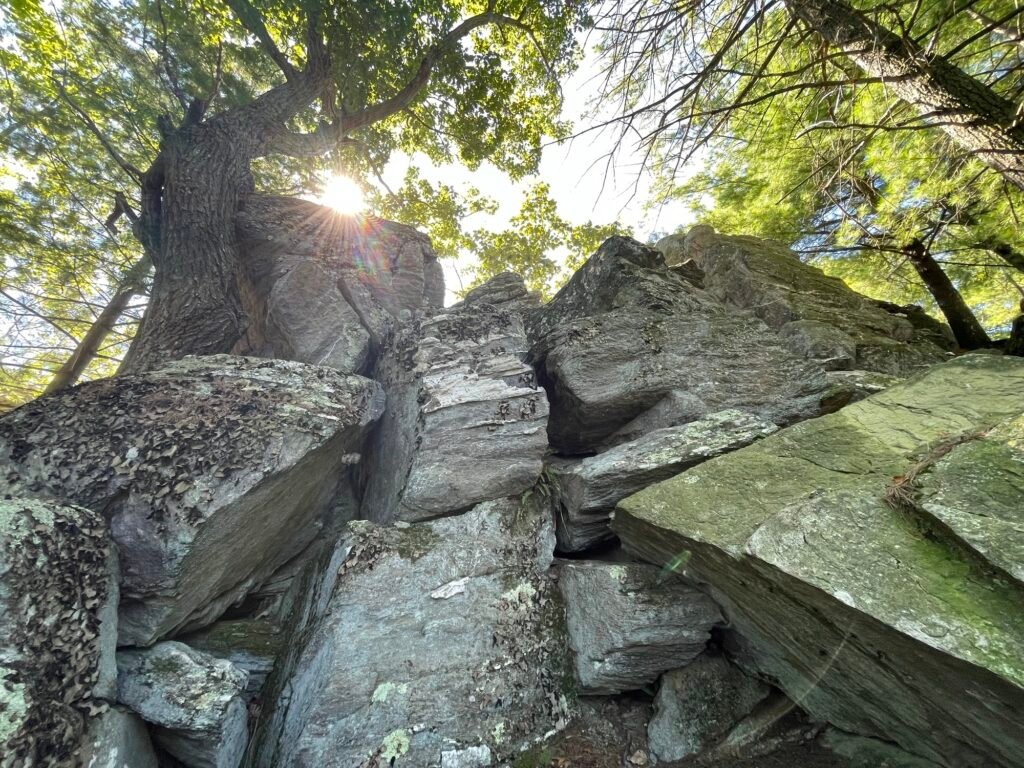
Once or twice, I needed to move both poles to one hand again so I could grab a handhold to pull myself up or squeeze through. It’s the main reason I don’t use the straps on the poles, which would complicate the seamless transfer to one hand and back. A little blood from a scraped knuckle was my only souvenir from passing through safely.
The part that “happened again” wasn’t the hike or using poles to navigate tricky terrain; it was a post in my social media feed later that evening questioning the “correct” way to use trekking poles. I knew instantly it would spark discussion and debate, including links to videos and guides on how to use poles. The whole idea of proper technique and opposing viewpoints cracks me up.
Overthinking It?
Using poles has always seemed intuitive and simple to me. Some might suggest that’s because I’m a skier. There, technique truly matters. In cross-country skiing, poles trigger the forward push, helping you kick and glide; in downhill skiing, they help shift your weight to the outside ski to initiate turns.
Or perhaps I find pole use intuitive because I use a wading staff for balance while fly fishing. A staff adds security when wading on slippery, moss-covered rocks and probing the stream bottom for obstacles or unseen drop-offs. There are no rules or techniques other than staying upright and safe—the same goals I have for hiking.
Snowshoeing may be the closest analogy to hiking. There, poles help to develop a rhythm and cadence. That is what most hikers mean when they talk about using hiking poles “correctly,” as if there’s some magic rhythm that makes hiking effortless. Some suggest shortening the poles for uphill hiking and extending them for the downhill. While others recommend offsetting the lengths so the inside pole is shorter on long cross-hill traverses.
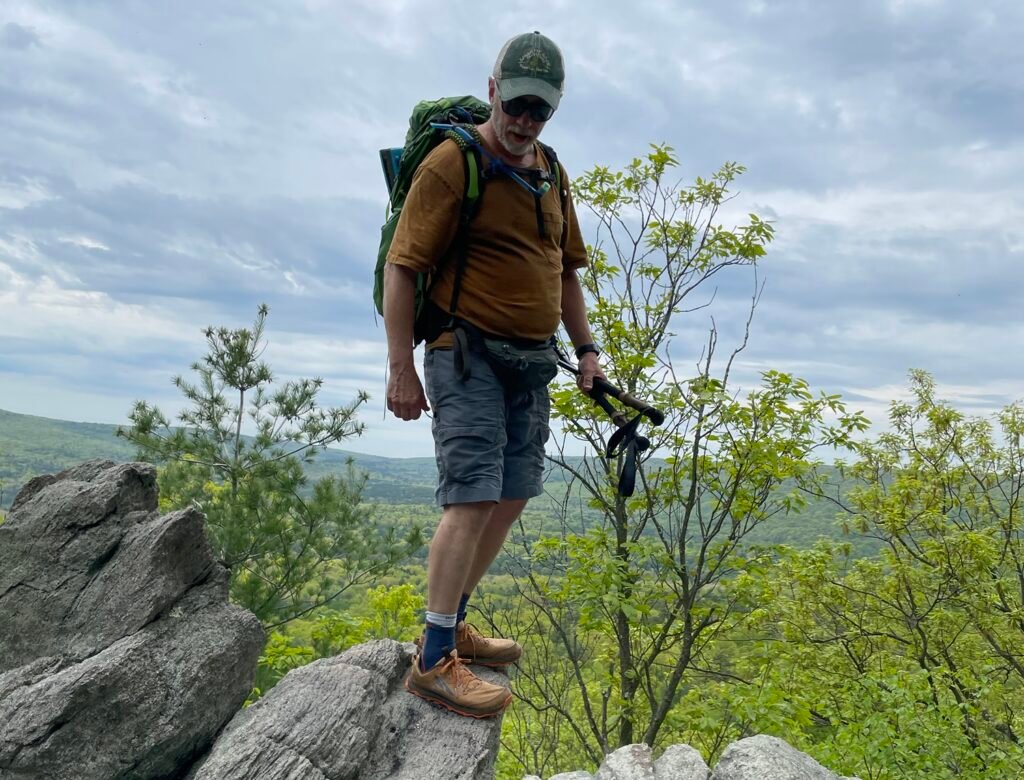
Others go through convoluted explanations about grip, where to plant the tip relative to your foot and other confusing minutiae. But perhaps the most commonly stressed technique is to put your hand through the straps from the bottom rather than the top. Supposedly it reduces the risk of injury in a fall. It makes sense, assuming you actually use the straps. I find it more efficient and helpful to freely move poles to one hand or the other without removing them from the straps, like I just did through White Rocks.
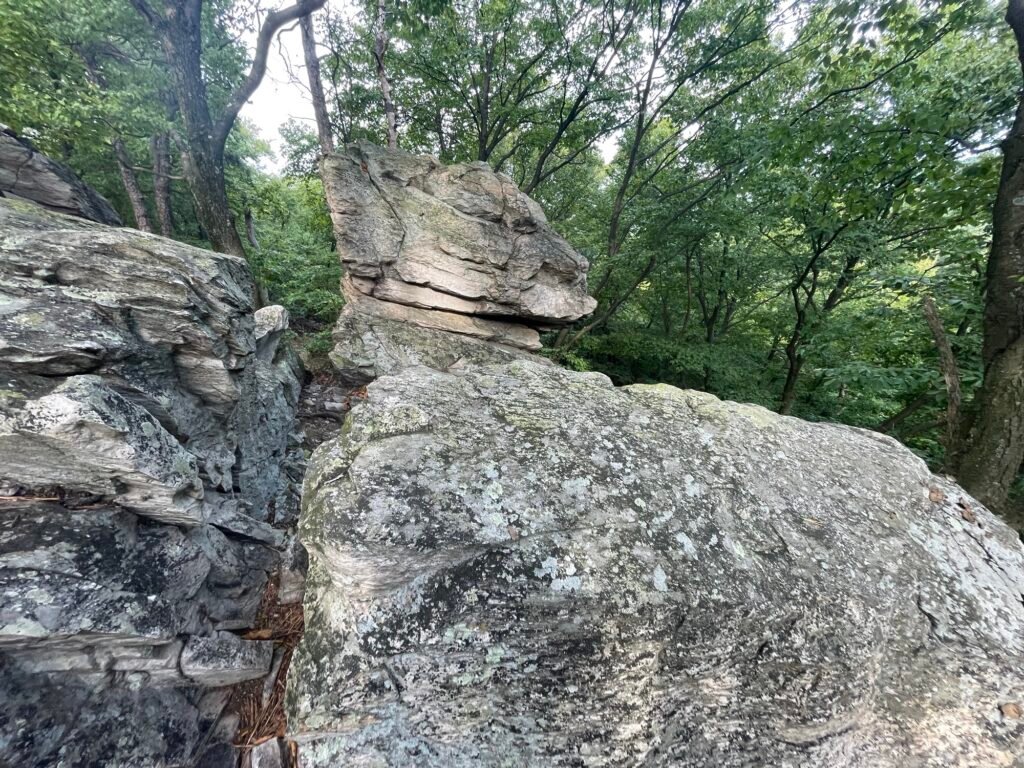
Many of these techniques sound good and may work on long climbs and switchbacks out West, but the AT, LT, and other Eastern trails don’t lend themselves to a steady rhythm or pace. Here, trekking poles help you pick your way through a constantly changing tread-way of rock, roots, mud, and stream crossings. They provide balance, especially on rocky downhills, while slightly reducing pressure on your knees.
Just Bring Them
Trekking poles serve many purposes beyond their intended use. Poles can also support a trekking pole tent like the one I use on longer trips. They help push aside branches or grass on overgrown trail sections. Clacking poles together is a common noise-making technique in bear country, or tapping rocky ledges to shoo away venomous snakes that might be hiding there.
But perhaps my favorite secondary use is breaking through early morning spider strands stretched across the trail, so you don’t look like an uncoordinated kung-fu master sweeping them away from your face!
The most important thing is to have them with you at all times and employ them whenever needed. I won’t hike without poles, except on occasions where I’ve loaned them to another hiker struggling more than I am. Sadly, that happens quite often on day hikes, even after I offer up my spare pair at the trailhead.
“Nah, I don’t use poles. They just get in the way,” is the usual response.
I hesitate before leaving my backup pair in the car. But after a few stumbles, I offer one of my poles to the stubborn hiker, and they invariably accept. As much as I need both poles, I’d rather do without one than deal with an injured hiker when they fall again. And people ask why I often hike alone!
Killing Your Darlings
In an early draft of my forthcoming memoir, One Mountain After Another, I shared my skepticism about proper pole technique following a dramatic and demoralizing spill on Camel’s Hump. I escaped serious injury, but broke a pole. While brushing off the dirt and leaves, I questioned whether I had been foolish to dismiss instructions on proper technique as well-intentioned but silly.
Ultimately, I decided to “kill that darling,” an expression writers use when they delete a favorite passage that doesn’t move the story forward. I hated to see it go, thinking it captured the moment with humility and self-deprecating humor. But I nuked it. Seeing the social media post on the subject today reminded me I had cut that from the book and inspired this rant.
It wasn’t the only trail topic that fell victim to the editing process. More than one editor suggested the book might benefit from murdering a few more darlings. Incorporating hiking facts and wisdom with the narrative arc became a balance. But I managed to keep several trail topics, including wildlife encounters, trail names, food storage, trail magic, Leave No Trace principles, mental health issues, forest healing, water treatment, backcountry poo, and the number one rule of long-distance backpacking: “hike your own hike.” Which, of course, would also apply to trekking pole use.
Quick Turnaround
Yesterday’s hike on the AT turned out to be a much-needed break from writing and editing. It was satisfying to pivot from other projects and throw this together in just a day. That ability would have helped during my Long Trail journey, when it took much longer to put posts together for The Trek.
Once again, my poles were invaluable for maintaining balance through the rocky maze. As I collapsed them for stowing in the car, I made a mental note to train more often on rocky terrain like White Rocks in PA. My knees felt like I had covered fifteen miles, rather than five. It probably would have been worse if I hadn’t used my poles—the correct way.
Leave a Reply